How to Clean Your Fridge Before Christmas
How to clean a fridge safely before the Christmas food shop, from glass shelves and door seals to the drain hole, plus when to defrost the freezer.
Read more →
Limescale is what hard water leaves behind when it dries. Most of London's water is hard, so the chalky marks return quickly around taps, on shower glass and across tiles. We have written separately about why limescale comes back so fast in London. This guide covers the practical part: how to remove it, and how to avoid damaging the surface underneath.
The method matters more than the effort. Limescale dissolves in acid, so time does the work and scrubbing only adds scratches. The same acid can permanently damage some bathroom materials, which is why the first step is working out what you are cleaning.
Identify every material in the area before you open a bottle. A descaler that is fine on a shower screen can harm the stone shelf directly below it.
Usually suitable for a mild acid descaler, used briefly and rinsed well:
Never use vinegar, lemon, limescale remover or any other acid on:
Acid etches marble and limestone on contact, and the mark cannot be cleaned away. Our guide to stains and etching on marble explains why.
Check the manufacturer's care guide first for:
If you cannot identify a surface, leave it alone. It is much easier to ask than to repair an etched worktop.
Use a mild descaler made for the surface you are cleaning. Citric acid products are a good place to start for many fittings, and at least one major tap manufacturer recommends them over stronger acids.
White vinegar is often suggested because it is cheap and it does dissolve limescale. It is still an acid, and that same manufacturer advises against vinegar-based cleaners on its taps. So check the care guide for your fittings, and do not assume that a kitchen cupboard product is automatically gentle.
Follow the product label for dilution and contact time, and test a small, hidden area first. Wear gloves, open a window or run the extractor fan, and rinse well.
Never mix cleaning products. Acid descalers and bleach can release toxic chlorine gas when they meet. If you have recently used bleach on a surface, rinse it thoroughly before you use anything else on it.
You may also see vinegar and baking soda recommended as a paste. Skip it. The two react and largely cancel each other out, so the fizz looks impressive while the mix loses much of the acid that would have tackled the limescale.
Spray or apply the product to a soft cloth rather than directly onto the tap. This keeps it away from nearby stone and grout. Work the cloth around the base of the tap and the spout, where deposits collect.
For a stubborn ring, hold the damp cloth against the deposit for a few minutes, within the time the label allows. Do not leave it for hours or overnight, because long contact is what damages plated finishes. Repeat with a fresh application if needed.
Rinse with clean water and dry with a microfibre cloth. Do not reach for a scouring pad, wire wool or abrasive cream. They can permanently scratch chrome, and a scratched surface makes it easier for the next deposit to take hold.
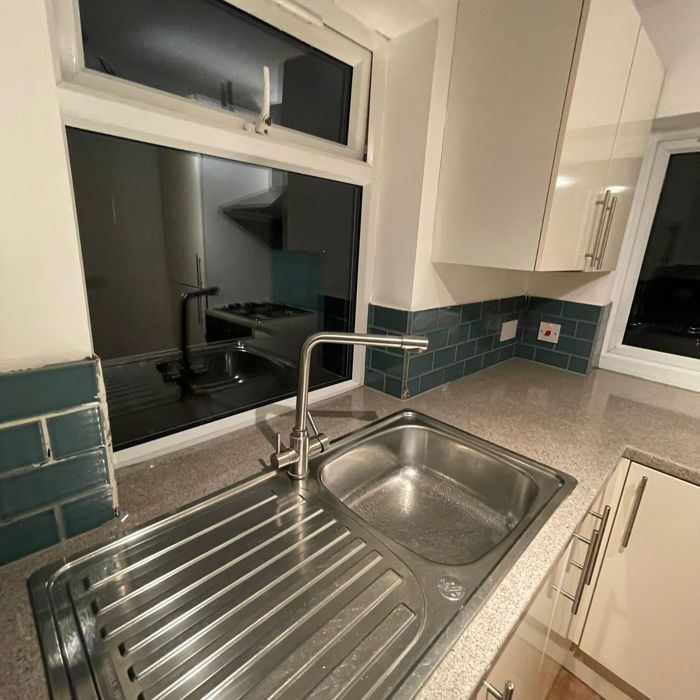
Many shower heads have flexible rubber nozzles. Rubbing them with your thumb while the water runs can clear deposits without any product at all, so try that first.
If the head is still blocked, check whether its care guide allows descaling. If it does, unscrew it where possible and soak it in a suitable descaler for the time on the label. Avoid an overnight soak unless the manufacturer says this is safe. Flush it through with clean water before you use it again.
Apply a suitable descaler with a soft cloth or non-scratch sponge, working from the bottom up to reduce runs. Leave it for the time on the label, then rinse thoroughly. Protect any stone shelf, floor or wall below the glass, and do not use this method at all if runoff could reach natural stone or grout.
Dry the glass with a squeegee or microfibre cloth, so that the final rinse does not leave fresh marks.
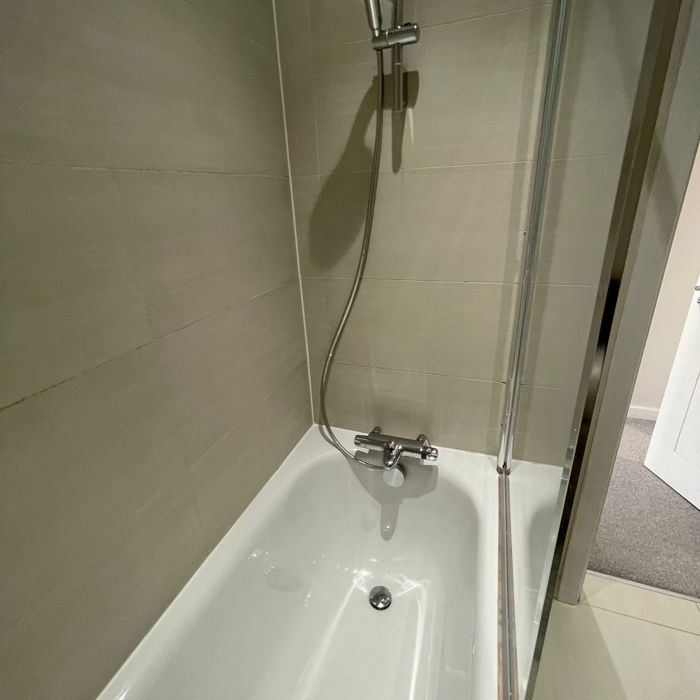
On glazed tiles, apply the descaler with a cloth and work on the tile face only. Grout is the difficulty, because it sits between every tile and acid can wear it away. Use a small amount of product, keep it off the joints, and rinse carefully.
For grout, use a pH-neutral cleaner and a soft brush. If tiles are natural stone, do not use a descaler at all.
Use a non-abrasive product that is suitable for the bath material, and rinse it away completely. Enamel and acrylic both mark more easily than they appear to, so test first and use a soft cloth. Stains that survive a careful clean may be wear in the surface, and more product will not fix them.
These habits reduce build-up, but they will not stop it completely in a hard water area. A water softener can help throughout the home. It is a plumbing decision rather than a cleaning one, and installers normally keep one unsoftened tap for drinking.
Heavy build-up is the point where a home descaling attempt can do more harm than good, especially when chrome sits close to marble or limestone. In a stone bathroom, the job depends on protecting the stone first, treating only the fittings and glass, and rinsing everything before it dries.
Our deep cleaning service covers this work, and you can see how it is priced on our pricing page. If you are not sure what your bathroom surfaces are, tell us what you have and send a few photographs. We will tell you honestly what can be safely improved.
Need a hand?
Family-owned, fully insured and worked to a written checklist. We reply within the hour, 8am to 8pm.
Keep reading

How to clean a fridge safely before the Christmas food shop, from glass shelves and door seals to the drain hole, plus when to defrost the freezer.
Read more →
Why mould and condensation appear in winter, how to clean small patches safely, and practical ways to reduce moisture in your London home.
Read more →
How to clean an oven safely, from racks and door glass to catalytic liners, plus when to use oven cleaner and the surfaces it can damage.
Read more →Our services

One-off and regular cleaning, worked to a checklist agreed with you.
Explore service home cleaning
Weekly or fortnightly visits, the same standard every time.
Explore service recurring cleaning
For homes that need recovering, not just tidying.
Explore service heavy-duty deep cleaning
Empty homes cleaned for moving out or moving in, worked to the check-in report.
Explore service end of tenancy and move in / move out cleaning
Staged cleaning that removes the dust builders leave behind.
Explore service after builders cleaning
Hotel-standard changeovers between guests.
Explore service short-let and airbnb cleaning
Offices and workplaces, cleaned out of hours.
Explore service commercial and office cleaning
Kitchens and dining rooms, cleaned after service.
Explore service restaurant cleaning


Ready across Central and West London.
Request your fixed price
Welcome to Elevated Polished Cleaning, a family-owned, fully insured cleaning company looking after homes and businesses across Central and West London.
Fill in the form below to book your next clean. We reply within the hour, 8am to 8pm, with a fixed price.
Join the families across Central and West London who trust us with their weekly clean.